













Wall Street’s biggest banks are proving that even geopolitical uncertainty and volatile markets can be highly profitable when trading desks stay busy and artificial intelligence fuels an unprecedented wave of capital raising.
The six largest US banks generated a combined $55 billion in second-quarter profits, comfortably exceeding analysts’ expectations as market volatility, record AI-related fundraising and a resurgence in investment banking produced one of the strongest quarters for the financial industry in years.
Even after excluding JPMorgan Chase’s one-off Visa and equity-related gains, the six banks still generated roughly $50.4 billion in profit during the quarter.
Every one of the six lenders exceeded Wall Street estimates on both earnings and revenue, driven largely by record trading activity and a sharp rebound in investment banking.
Trading desks deliver blockbuster quarter
Trading operations once again emerged as the biggest earnings driver as geopolitical tensions and energy market volatility kept investors actively repositioning portfolios.
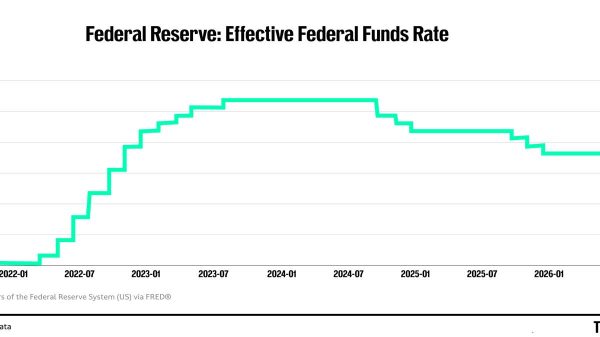
Financial markets were shaken during the quarter by the conflict in the Middle East and disruptions to shipping through the Strait of Hormuz, while a spike in oil prices reignited inflation concerns and prompted investors to reassess expectations for Federal Reserve interest-rate cuts.
Those rapid swings translated into exceptional trading volumes across equities, currencies, commodities and fixed income.
Goldman Sachs led the industry with a record $7.42 billion in equities trading revenue, a 72% increase from a year earlier.
Fixed-income trading contributed another $4.59 billion, up 32%.
JPMorgan Chase generated $6 billion in equities revenue, an 86% jump from last year, while fixed-income trading remained steady at $6.1 billion, bringing total markets revenue to $12.1 billion.
Morgan Stanley also reported record equity trading revenue of $6.3 billion, up 69%, alongside $2.5 billion from fixed income.
Bank of America posted record equities trading revenue of $3.6 billion, up 70%, while fixed-income, currencies and commodities (FICC) revenue rose 9% to $3.5 billion.
Citigroup’s equities trading business climbed 45% to a record $2.3 billion, while fixed-income revenue increased 7% to $4.7 billion.
Although its trading franchise remains considerably smaller, Wells Fargo also benefited from heightened activity.
Markets revenue within its Corporate and Investment Banking division rose 24% to $2.21 billion, with equities trading alone increasing 64%.
Dealmaking powers investment banking recovery
The recovery in investment banking proved equally significant, with AI emerging as one of the biggest catalysts for capital markets activity.
Investment banking fees surged across all six banks as mergers and acquisitions, equity offerings and debt issuance accelerated during the quarter.
Goldman Sachs generated $3.4 billion in investment banking fees, up 55% year over year, supported by strong advisory work and record debt underwriting.
JPMorgan Chase reported $3.3 billion in fees, up 30% and its strongest investment banking quarter since 2021.
Morgan Stanley posted the fastest growth among its peers, with investment banking revenue jumping 58% to $2.44 billion.
Bank of America, Citigroup and Wells Fargo also recorded healthy increases in advisory and underwriting income.
According to Dealogic, global investment banking revenue climbed 24% during the first half of 2026 to $61.4 billion, driven by mega mergers, a vibrant IPO market and elevated trading volatility.
Among the quarter’s most lucrative transactions was SpaceX’s record-breaking $86 billion initial public offering in June, the largest IPO in US history.
The listing alone generated roughly $500 million in investment banking fees across participating firms, with Goldman Sachs serving as lead-left underwriter while JPMorgan, Bank of America, Citigroup and Wells Fargo participated as co-underwriters and advisers.
AI spending is creating a new financing cycle
Executives across Wall Street argued that artificial intelligence is creating opportunities extending far beyond technology companies themselves.
Banks are financing data centres, underwriting debt and equity offerings, advising on acquisitions and facilitating the enormous capital flows required to build AI infrastructure worldwide.
For example, Wells Fargo advised on NextEra Energy’s $67 billion acquisition of Dominion Energy and Apollo’s $35 billion financing package for AI company Anthropic.
Goldman Sachs CEO David Solomon described the investment wave as creating “a ripple effect” throughout the US economy by generating financing and trading opportunities across public and private markets.
“We are in the middle of an AI capex super cycle where there are demands on financing in every single financing instrument, in every region of the world and across every single industry,” Goldman Chief Financial Officer Denis Coleman said.
Wells Fargo banking analyst Mike Mayo said the AI investment cycle “reached a tipping point” during the second quarter, identifying Goldman Sachs, JPMorgan Chase and Morgan Stanley as the biggest beneficiaries.
Following the strong earnings reports, Mayo raised his price targets on both Goldman Sachs and JPMorgan.
Consumer lending remains resilient
While capital markets dominated the headlines, consumer banking also continued to support earnings despite persistent inflation pressures.
Banks reported relatively low delinquency rates, while expectations that interest rates will remain elevated for longer continued to support lending profitability.
Bank of America added one million new credit card accounts during the quarter as customers spent $266 billion on debit and credit cards, up 9% from a year earlier.
Wells Fargo reported a 33% increase in auto loan revenue, helped by higher balances and stronger loan originations.
Even as many households continued to face rising costs for essentials such as fuel and groceries, banks continued to benefit from healthy consumer spending and resilient credit quality.
Banks are also adopting AI internally
The AI boom is not only generating advisory and financing fees but is also reshaping banks’ own operations.
Lenders are increasingly deploying artificial intelligence to improve productivity, automate workflows and manage costs.
Bank of America disclosed that it now has more than 300 approved artificial intelligence and machine learning use cases across its business.
These include 114 live generative AI applications, with 34 already deployed at scale to improve workflow efficiency and frontline productivity.
The post The $55B quarter: how trading, AI, and dealmaking drove record earnings for Big Banks appeared first on Invezz